
When it comes to bridal beauty, few things are as symbolic, cherished, and culturally rich as mehendi. Whether it’s the intricate swirls of traditional motifs or the clean elegance of minimal patterns, mehendi holds a special place in every bride’s heart. It’s not just body art—it’s emotion, tradition, a celebration, and a moment every bride remembers forever.
Today’s modern brides are beautifully diverse. Some prefer light, elegant, and minimalistic designs, while others embrace the timeless charm, storytelling, and grandeur of traditional Indian mehendi. Both forms carry their own beauty, meaning, and appeal.
But as a bride, how do you decide which mehendi style is right for YOU?
This blog will serve as a guide, helping you understand:
- What minimal and traditional mehendi styles truly mean
- The feelings and symbolism behind both
- Their pros, cons, and suitability
- How to choose the perfect style based on outfit, occasion, personality, and more
- Real-life examples of when each style shines
- Expert artist tips for both looks
Let’s dive in.
Understanding Mehendi: More Than Just a Bridal Ritual
Before we compare the two styles, it’s important to acknowledge what mehendi represents for a bride.
Mehendi symbolizes:
- Love
- New beginnings
- Bond between partners
- Auspiciousness
- Beauty and grace
- Blessings for the bride
Every stroke applied by an artist is intentional, expressive, and filled with meaning. This is why choosing the right mehendi style becomes so important—it should match not only your outfit, but also your personality, story, and vision for your big day.
What Is Minimal Mehendi?
Minimal mehendi is all about simplicity, elegance, and clean patterns. The designs are intentionally light, breathable, and spacious. The goal is to enhance the hands and feet without overwhelming them.
Characteristics of Minimal Mehendi:
- Lots of empty spaces
- Small, delicate motifs
- Thin and clean lines
- Symmetrical patterns
- Geometric or modern elements
- Shorter coverage area
- A fresh, light appearance
Minimalistic mehndi is often inspired by Arabic, Moroccan, geometric, and contemporary styles.
Why Modern Brides Love Minimal Mehendi
Minimal mehendi has become a trend for brides who want a modern, sophisticated, and subtle aesthetic.
1. Lightweight and Comfortable
Minimal mehendi allows your skin to breathe. It’s perfect if you don’t enjoy sitting for long hours or don’t like feeling “covered”.
2. Perfect for Pre-Wedding Functions
Engagements, sangeet, haldi, cocktails, or civil ceremonies—minimal mehendi shines during modern functions.
3. Compliments Modern Bridal Outfits
Light lehengas, pastel tones, contemporary silhouettes—minimal mehendi aligns beautifully with today’s fashion.
4. Quick Application Time
Most minimal designs take 30 mins to 2 hours, reducing your prep time and stress.
5. Camera-Friendly
Minimal, clean designs photograph extremely well, especially during outdoor shoots.
6. Looks Chic and International
Minimal mehendi resonates with global aesthetics. Many brides abroad prefer this clean vibe.
Common Motifs Used in Minimal Mehendi
Minimal mehendi celebrates clean, airy patterns with motifs like:
- Leaves
- Micro florals
- Mandala circles
- Lotus outlines
- Vines and trails
- Geometric grids
- Simple jaali
- Tattoo-style motifs
- Modern borders
- Empty space artistry
Each detail is placed intentionally for elegance without clutter.
What Is Traditional Mehendi?
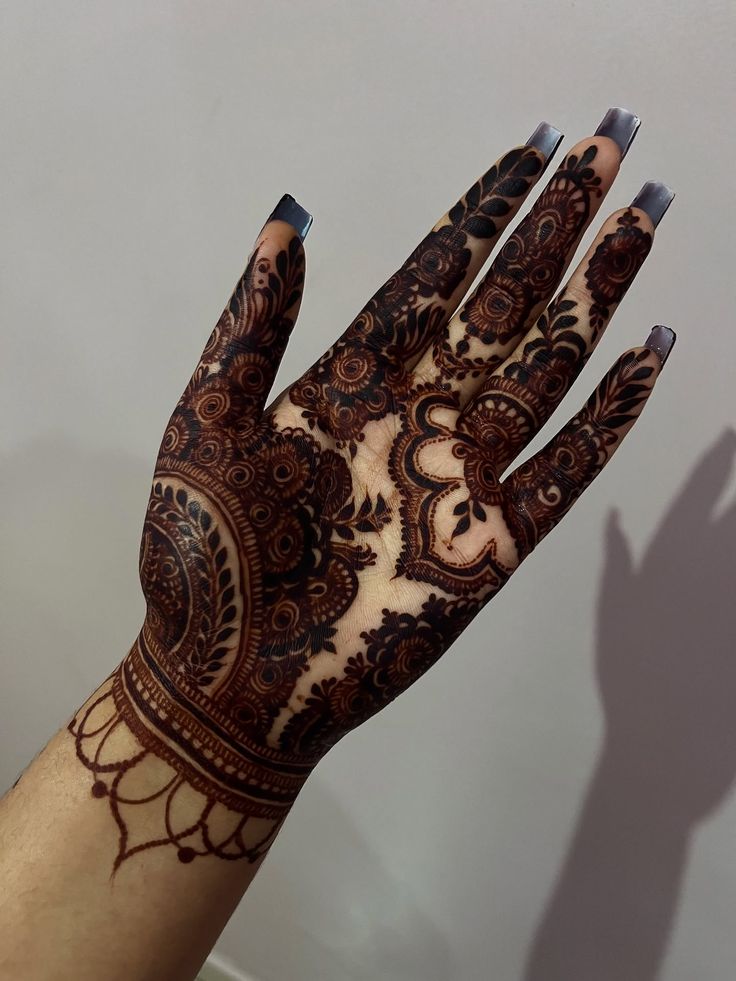
Traditional mehendi is rich, cultural, detailed, and deeply artistic. It covers the hands and often extends till the elbows or beyond. It represents the heritage that Indian brides have cherished for centuries.
Characteristics of Traditional Mehendi:
- Full coverage (front and back)
- Dense detailing
- Symmetrical motifs
- Bridal storytelling elements
- Cultural symbols
- Larger designs with zero empty space
It often includes motifs like peacocks, dulha–dulhan, elephants, paisleys, and sacred symbols.
Why Brides Still Choose Traditional Mehendi
Despite modern trends, traditional mehendi remains the heart of Indian weddings.
1. Symbolically Rich
Traditional mehendi includes motifs that represent love, prosperity, fertility, and blessings.
2. A Complete Bridal Look
Nothing completes a classic bridal outfit like full, intricate mehendi.
3. Darker, Longer-Lasting Stain
The density helps the color stain deeper, giving that beautiful “bridal maroon” look.
4. Photographs Beautifully for Close-Up Shots
The fine detailing looks magical in close-ups and candids.
5. Cultural Connection
Many brides choose it to honor their roots, rituals, and family traditions.
6. It Tells a Story
Traditional mehendi often includes personalized details:
- Proposal dates
- Couple initials
- Relationship symbols
- Wedding venue elements
- Moments from their journey
It becomes a wearable storybook.
Common Motifs in Traditional Mehendi
Traditional mehendi is known for its iconic motifs:
- Bride and Groom figures
- Dhols & baraat
- Kalash
- Mandap
- Elephants
- Paisleys (kairi)
- Peacocks
- Traditional florals
- Jaali
- Swirls
- Shubh symbols
- Varmala scene
- Palanquin (doli)
Each holds cultural meaning and enhances the bridal charm.
Minimal vs. Traditional Mehendi: A Detailed Comparison
Below is a thorough comparison to help brides choose the right style:
1. Appearance
Minimal Mehendi:
- Clean
- Light
- Space-focused
- Modern
- Sophisticated
Traditional Mehendi:
- Dense
- Grand
- Artistic
- Intricate
- Rich
2. Time Required
Minimal:
30 mins – 2 hours
Perfect for brides with limited preparation time.
Traditional:
3–8 hours
Ideal for brides who enjoy the ritual and experience.
3. Stain
Minimal:
Lighter, depending on density.
Traditional:
Deeper and darker due to its density.
4. Coverage
Minimal:
Partial hands or a single motif.
Traditional:
Full hands, often up to elbows/feet.
5. Bridal Aesthetic
Minimal:
Modern, chic, subtle bride.
Traditional:
Cultural, royal, traditional bride.
6. Outfit Coordination
Minimal:
- Pastel lehengas
- Fusion outfits
- Evening gowns
- Pre-wedding events
Traditional:
- Heavy bridal lehengas
- Banarasi, Kanjeevaram sarees
- Traditional bridal wear
7. Comfort Level
Minimal:
More comfortable with less coverage.
Traditional:
May feel heavier due to density and long drying time.
8. Photography
Minimal:
Great for aesthetic shots.
Traditional:
Best for close-ups and cultural shots.
Which Mehendi Style Suits YOU? A Personalized Guide
Choosing mehendi is a personal decision. Here’s a guide based on your personality, event, outfit, and taste.
Choose Minimal Mehendi If You Are:
1. A Modern Bride
You love subtle elegance and don’t prefer overly heavy designs.
2. Someone Who Wants Comfort
You don’t enjoy sitting for long hours or keeping hands still.
3. A Pastel or Contemporary Outfit Bride
Minimal mehendi beautifully matches modern styles.
4. A Bride Who Loves Aesthetic Simplicity
You prefer clean lines, symmetry, and lighter artistry.
5. Having Destination Weddings or Day Ceremonies
Minimal mehendi looks especially fresh in outdoor functions.
6. A Bride Who Doesn’t Prefer Dark or Heavy Stains
You like natural-looking color.
Choose Traditional Mehendi If You Are:
1. A Cultural or Sentimental Bride
You love traditions, rituals, and their meanings.
2. A Bride Wearing Heavy Lehenga or Saree
Traditional outfits need equally grand mehendi.
3. Someone Who Loves Intricate Art
You appreciate detailed patterns and storytelling.
4. A Bride Who Wants Deep Mehendi Color
Dense mehendi stains darker and deeper.
5. A Bride With Larger Wedding Events
Regal mehendi matches the grandeur of big ceremonies.
6. Someone Who Wants Custom Elements
Initials, love story scenes, and couple motifs fit traditional style.
How to Decide Between the Two (Step-by-Step Decision Guide)
If you’re still confused, follow this guide:
Step 1: Think About Your Outfit
Heavy + traditional outfit → Traditional mehendi
Pastel + fusion outfit → Minimal mehendi
Step 2: Think About Your Ceremony Style
Big wedding with rituals → Traditional
Intimate, modern, or destination wedding → Minimal
Step 3: Consider Your Personality
Soft-spoken, simple, aesthetic bride → Minimal
Grand, expressive, cultural bride → Traditional
Step 4: Time Availability
2 hours → Minimal
6+ hours → Traditional
Step 5: Comfort Level
Don’t like sitting too long? → Minimal
Enjoy the ritual? → Traditional
Step 6: Photos You Want
Aesthetic shots → Minimal
Cultural close-ups → Traditional
Hybrid Mehendi – The Best of Both Worlds
Many brides today choose a blended style:
Minimal front hand + Traditional full back hand
OR
Traditional palms + Minimal fingers
This hybrid style gives:
- Balance
- Uniqueness
- Comfort
- Beauty
- Personal touch
Perfect for brides torn between the two options.
Expert Tips from a Mehendi Artist
Exfoliate hands one day before
This helps the stain set better.
Don’t apply oil before mehendi
It prevents color absorption.
Choose a motif style that suits your skin tone
Dense patterns suit fair-medium tones; minimal suits all.
Keep your hands warm
Mehendi darkens with warmth.
Avoid washing hands for 5–6 hours after removal
Let the color deepen naturally.
Final Verdict: Minimal or Traditional?
There is no right or wrong choice—only the choice that feels like YOU.
If you want:
- Lightness
- Modern look
- Quick application
→ Go for Minimal Mehendi.
If you love:
- Traditions
- Rich detailing
- Bridal grandeur
→ Choose Traditional Mehendi.
Your wedding is your story, and your mehendi should reflect your heart, your style, and your personality.
Whichever you choose, wear it with pride—because mehendi is not just artistry, it’s emotion.